





New computational method captures molecular dynamics after ultrafast excitation of several coherent states
06.03.2026
 |
|
|
- Researchers led by Prof. Fernando Martín capture how electrons and nuclei interact after attosecond light excitation in a numerically inexpensive way.
- The approach, unique in capturing the effect of the initial excitation of several states, enables new opportunities for understanding charge movement in complex molecules.
| Tweet |
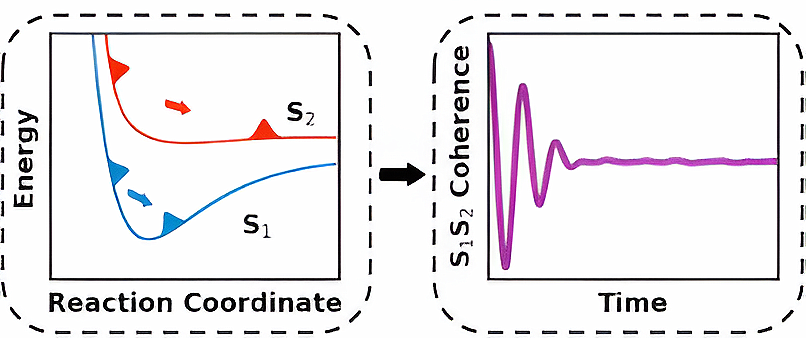
Madrid, 6th march, 2026. Scientists have developed a powerful new computational method that helps explain what happens inside molecules when they are struck by extremely short bursts of light. Modern attosecond and femtosecond laser pulses can trigger several electronic states in a molecule at once, creating a delicate quantum mixture known as electronic coherence. Understanding how this coherence evolves—and how it is disrupted as nuclei begin to move—has been a long-standing challenge, limiting our ability to interpret the ultrafast spectroscopy experiments in complex molecules.
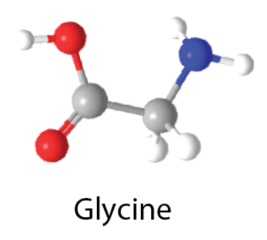
The new method, called Trajectory Surface Hopping with Projected Forces and Momenta (TSH-PFM), provides an efficient way to simulate the intertwined motion of electrons and nuclei during these ultrafast processes. Unlike previous approaches, TSH-PFM captures the excitation of several coherent states. The method accounts for key quantum effects, including the loss a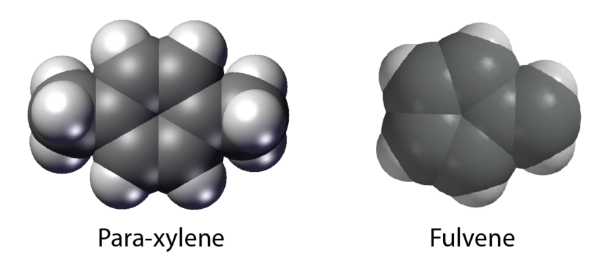 nd regeneration of electronic coherence and the complex behavior that emerges near special molecular sites known as conical intersections. The researchers validated the method by successfully reproducing known quantum-mechanical results for several benchmark molecules, including para-xylene and fulvene, while working in full dimensionality.To demonstrate the method’s broader impact, the team applied the method to glycine, the simplest amino acid. The simulations revealed that initial electronic coherences can dramatically reshape how electric charge is distributed across the molecule within the earliest moments after excitation.
For a detailed theoretical modelling of the dynamics after the excitation of a molecule, it is necessary to take into account the subtle interaction between electrons and nuclei, which ultimately underlies the formation of chemical bonds. In their latest work, researchers at Universidad Autónoma de Madrid and IMDEA Nanociencia institute succeeded to capture the underlying electromagnetic and quantum effects in a numerically inexpensive way, setting the way for interpreting future experiments in chemistry, biology, and materials science that probe complex molecules on its fastest timescales.
The work is the result of the European TOMATTO project, funded by an ERC Synergy grant (G.A. 951224). TomATTO aims to capture the ultrafast dynamics of electrons with the goal of improving solar energy conversion efficiency._
Reference:
J. Chem. Theory Comput. 2025, 21, 21, 10645–10668
https://doi.org/10.1021/acs.jctc.5c00531
 Link to the repository: https://hdl.handle.net/20.500.12614/4153
Contact:
IMDEA Nanociencia Dissemination and Communication Office
This email address is being protected from spambots. You need JavaScript enabled to view it.


Source: IMDEA Nanociencia.
IMDEA Nanociencia Institute is a young interdisciplinary research Centre in Madrid (Spain) dedicated to the exploration of nanoscience and the development of applications of nanotechnology in connection with innovative industries.